



Security assessments were once built around a relatively simple structure: a defined asset, a defined threat profile, and a focused review of physical vulnerabilities. The objective was clear, identify weaknesses on site and recommend proportionate improvements. Risk was largely visible and geographically anchored.
That model no longer reflects reality.
Risk is no longer confined to the physical environment. It is shaped by interconnected systems, digital infrastructure, online exposure, behavioural factors, and an increasingly fluid threat landscape. Many vulnerabilities now develop well beyond the site boundary, and long before any physical incident occurs.
A modern security assessment still begins with identifying threats and weaknesses, but it must also examine how exposures interact.
- Physical controls cannot be considered in isolation from technology.
- Cyber risk influences operational resilience.
- Online exposure reshapes threat dynamics.
- Human behaviour can quietly undermine even well-designed safeguards.
The challenge today is rarely spotting individual vulnerabilities. It is understanding how they combine and where that combination fundamentally alters risk.
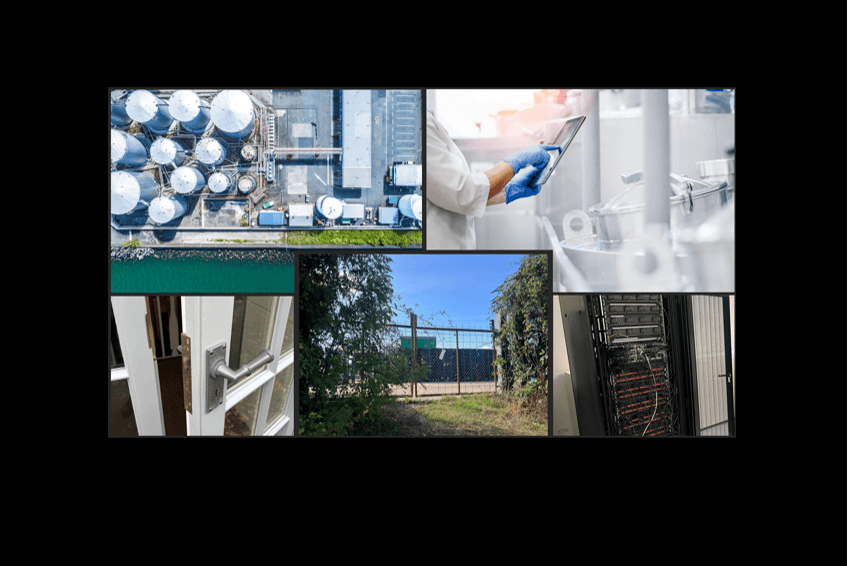
Clients often expect assessments to focus on what can be seen and physically tested: locks, cameras, entry points, perimeter lines. Those elements still matter, but modern vulnerabilities rarely sit neatly within them. They emerge at the intersection of disciplines.
A weakness that appears manageable in isolation can become critical when aligned with another. Connectivity changes the relevance of physical controls. Public information alters the significance of layouts and routines. Minor behavioural or procedural decisions can have disproportionate impact.
Time is another shift.
Assessments were once periodic exercises. Today, the risk environment moves quickly through new technology, evolving routines, staff turnover, supplier access, and information shared online. An assessment is no longer a static document; it is a baseline that must be revisited and challenged as conditions change. That is the real difference.
A modern assessment is not simply a catalogue of weaknesses. It is an analysis of how risk is created, how physical, technical, digital, and human factors combine to shape exposure.
If those connections are not examined, the result may feel thorough yet still miss what matters.
Modern risk does not sit in one place or belong to one discipline. It forms in the overlap.
The value today lies not in producing longer reports, but in delivering joined-up judgement insight that moves beyond reassurance and provides genuine understanding.